
Slave-Management Tips From Roman Farming Manuals

1.
Columella (like all the other Roman agricultural writers) takes it for granted that your overseer/estate manager has to be a slave—which he says is bad news, since slaves are unreliable. Why not just hire a free man, New-World-style?
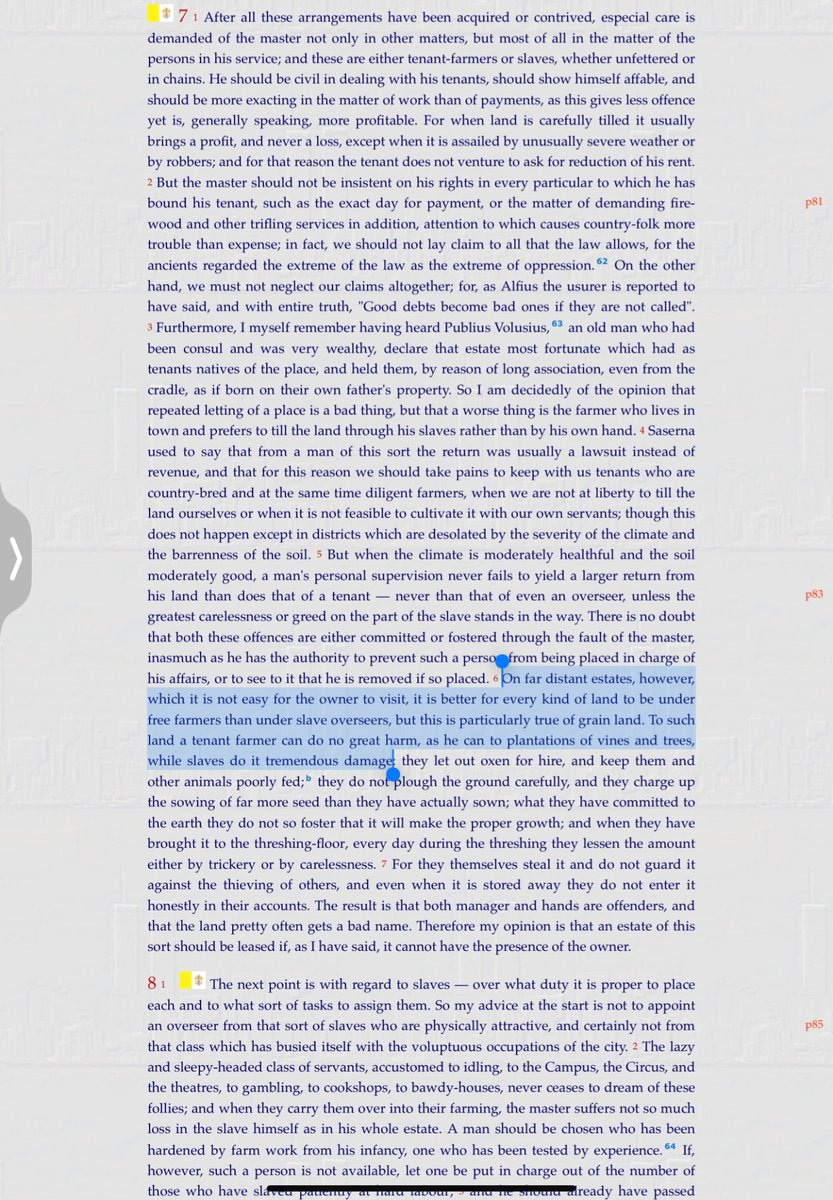
Note that even in Poland and Russia, where aristocrats were fine with their serfs being literate and highly skilled, hired free estate managers were ubiquitous. (The German ones were notorious for cruelty.) The obvious answer is the Greco-Roman idea that being someone else’s employee was degrading for a free man. But this upper-class prejudice didn’t prevent free hired workers from working alongside slaves throughout the economy, as inscriptions show.
2.
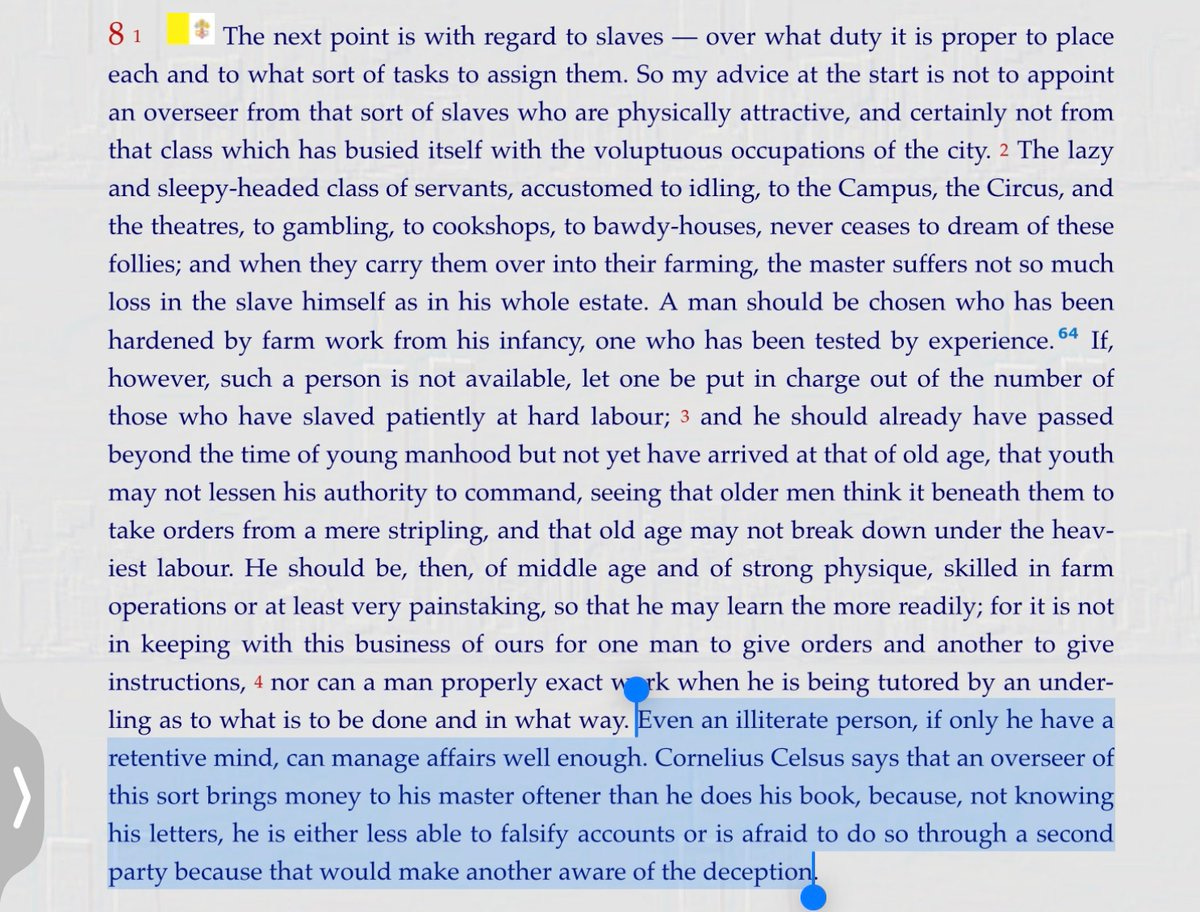
Some Romans thought illiterate slaves made *better* managers, since they can’t cook the books! I’ve never actually seen a pre-modern reference to slave literacy as undesirable.
3.
Columella’s estate houses the slaves in a kind of apartment building, with private bedrooms and a communal kitchen. Basically the same setup as in the West Indies or Brazil, except with the central courtyard roofed over.
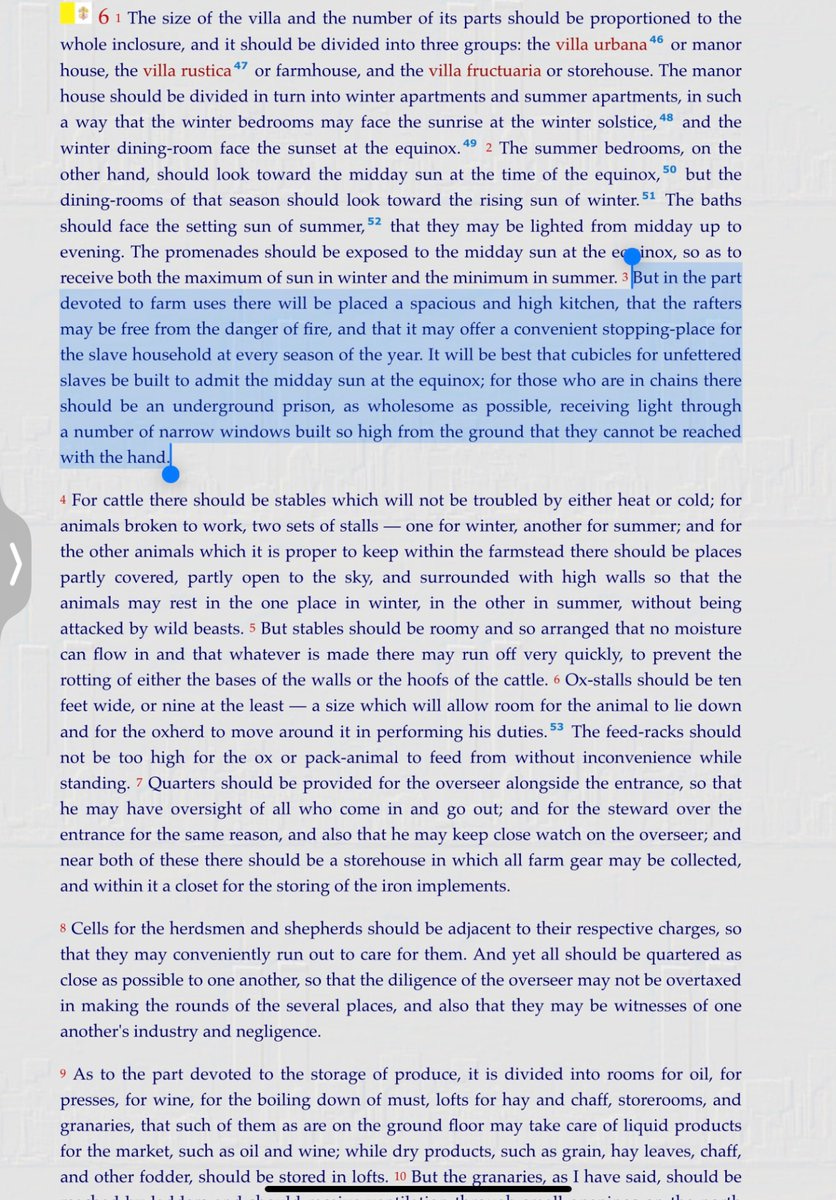
Note that Columella does want his slaves to reproduce —he rewards mothers of four kids with freedom. Why didn’t this lead him, as it did post-slave-trade New World planters, to build single-family housing?

4.
Varro—writing in the 1st c.BC, when Roman conquests were still ongoing—recommends using free hired workers for dangerous or especially hard work. Slaves must have been expensive. It looks more like the US than the West Indies.
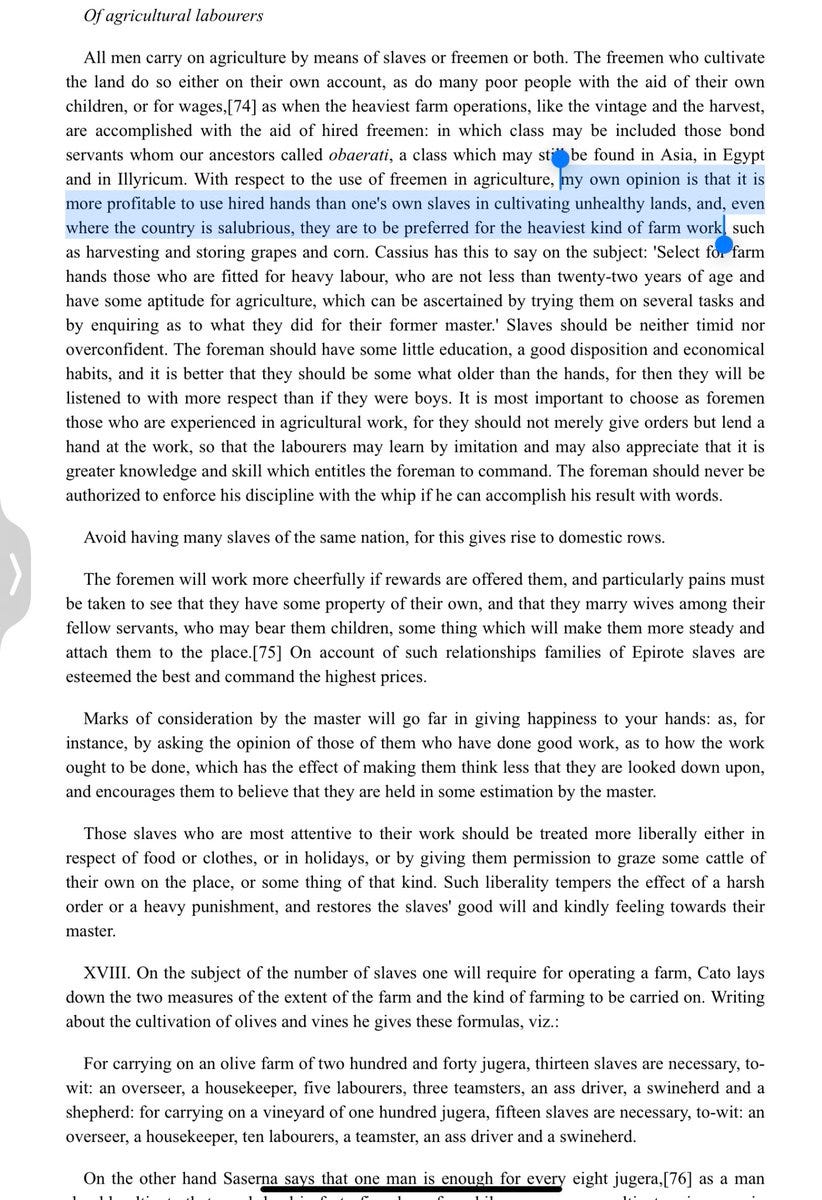
The fact that there were enough free Romans poor enough to volunteer for work that could kill slaves does seem hard to square with the universal optimism about Roman living standards.