
Assorted Thoughts On Religion, Mostly (But Not Entirely!) Negative

1.
This is the single thing that most shook my faith in Christ’s resurrection, and which I’ve literally never seen discussed:
The alleged resurrection of Simeo Ondeto—a Kenyan messiah claimant who died in 1993 and was supposedly resurrected, appearing to large gatherings of his followers.
Why should I believe Paul’s claim in 1 Corinthians about Jesus appearing to the 500 brethren, and not this website’s claim about Simeo Ondeto appearing in the flesh to over 30,000 believers in 2012?
It’s true that Ondeto’s movement doesn’t claim an empty tomb: they hold that he was resurrected spiritually. But Paul doesn’t claim an empty tomb either. And in the Ondeto resurrection story, as told here, he seemed to have a physical body--e.g., handling a microphone.
Source:
https://lejionmaria.blogspot.com/2014/06/the-ressurection-of-black-messiah-simeo.html
2.
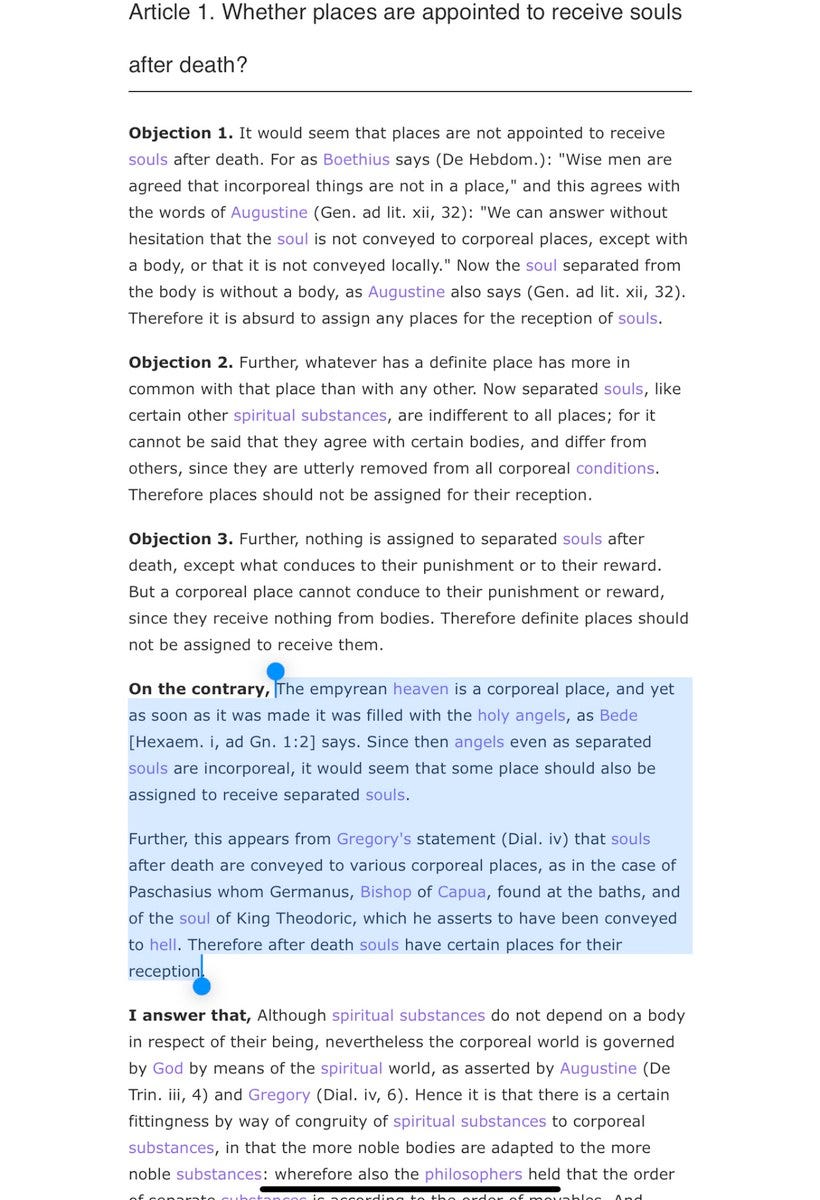
Something that sounds like a dumb New Atheist strawman but is actually true: Pre-modern Christianity conceived of heaven as a physical place, which you could (in principle) reach by going upward.
This is seriously underdiscussed as a major worldview change due to post-Copernican science.
You can read Aquinas explicitly declaring that the heaven of angels and blessed souls is, in fact, a “corporeal place”:
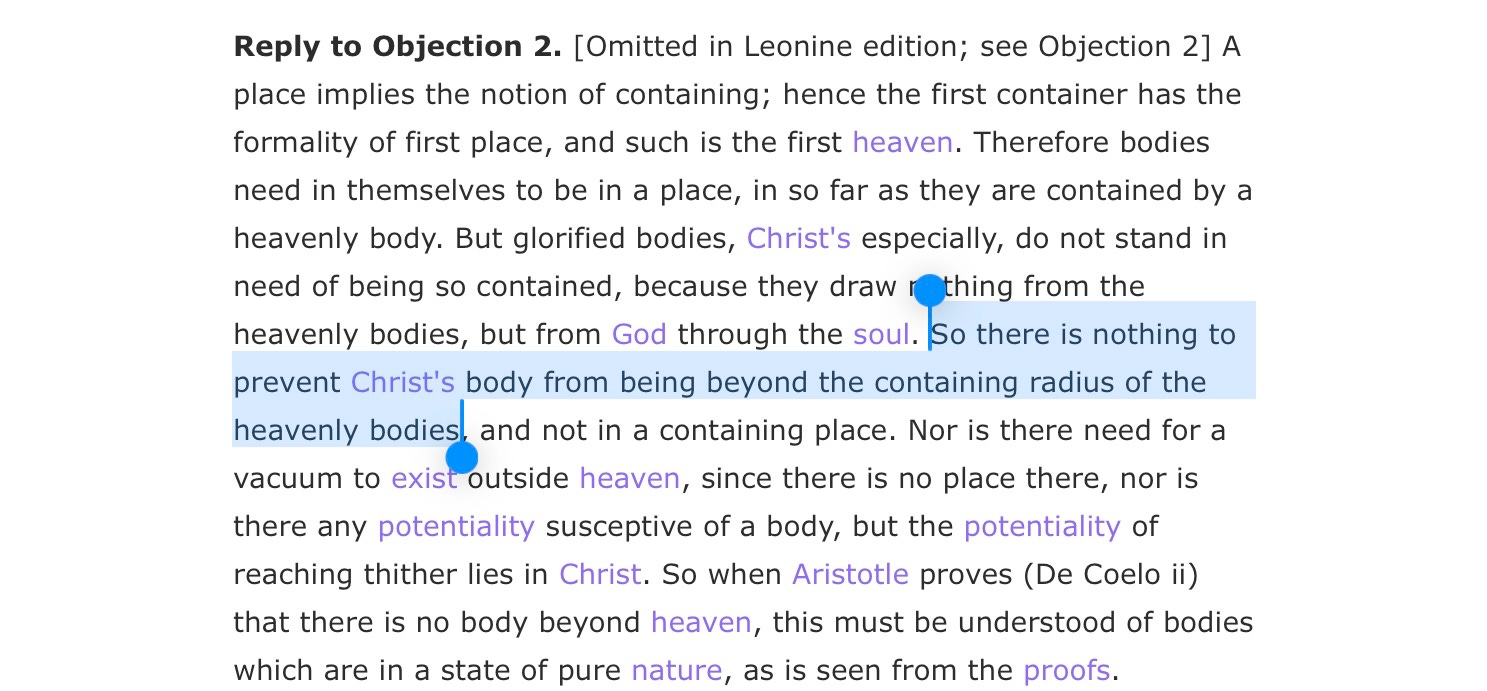
Elsewhere, in his discussion of Christ’s Ascension, he says that this place, where the ascended Christ also went, is “beyond the containing radius of the heavenly bodies”—that is, outside the concentric spheres holding the heavenly bodies of Ptolemaic cosmology.
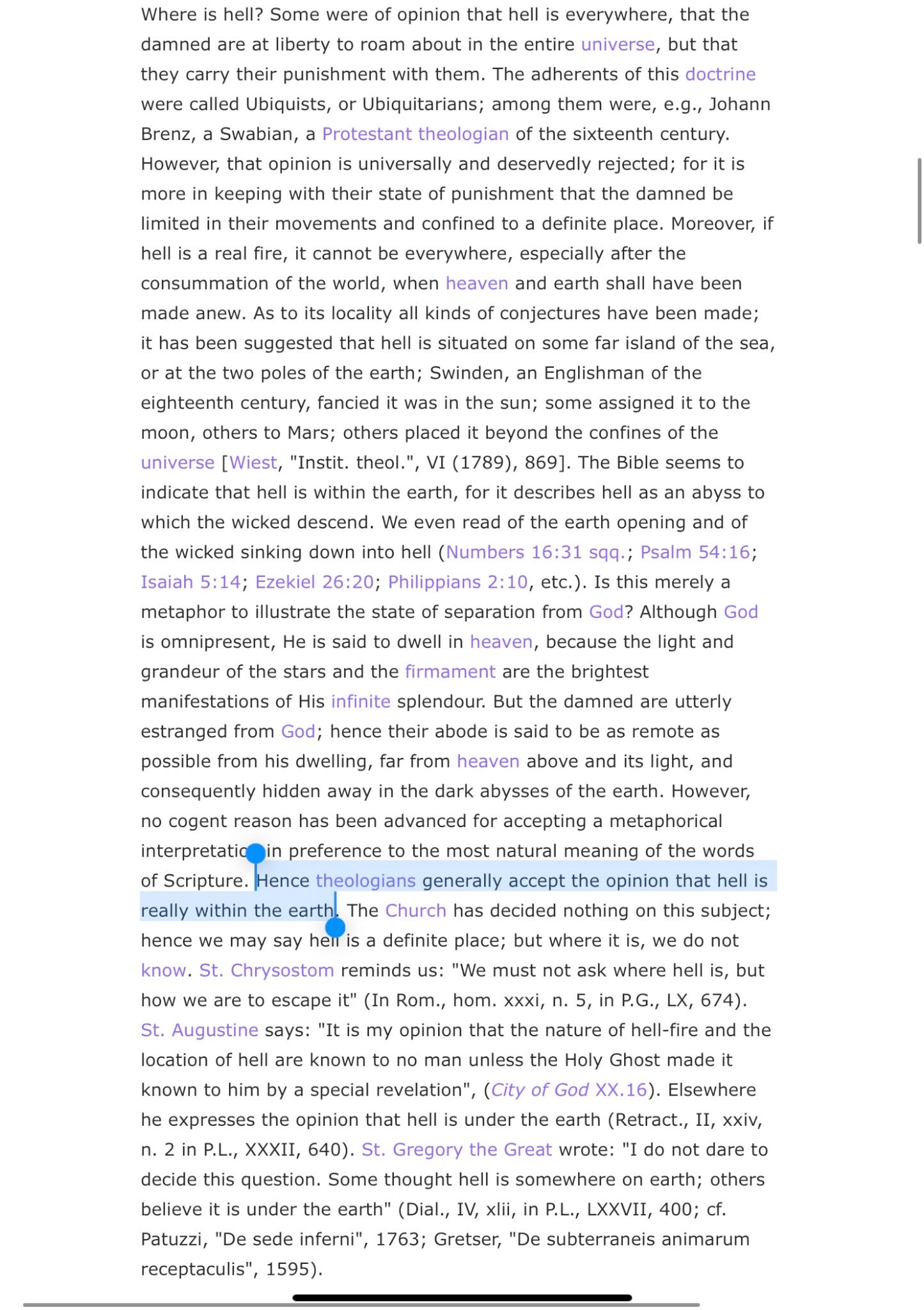
And the idea that hell was a physical place, located in the center of the earth, took even longer to be abandoned. As late as the 1910 Catholic Encyclopedia, most theologians accepted it!
3.
The best anti-religious arguments tend to be historical, not philosophical. Hence, I often have the frustrated sense that Christian philosophers of religion are unaware of the strongest arguments against their views.
These arguments include: 1) The historical unreliability of the scriptures. This obviously includes Christian belief in the Resurrection. But it also includes the claim that in their canonical form the scriptures don’t reflect what the historical founder actually taught.
E.g., arguments that the historical Jesus never claimed divinity (thus neatly eliminating CS Lewis’s trilemma) and saw his sole job as warning Israel of the impending apocalypse. Or arguments that the historical Mohammed was just an adoptionist Christian preacher. Or that the historical Siddhartha Gautama taught that jhana meditation was the way to enlightenment (rather than a mere sideshow as later Buddhist tradition holds.)
2) The second kind of historical anti-religious argument isn’t that scripture and religious tradition are unreliable about factual claims. It’s that their teachings were morally bad.
I classify this as historical, rather than philosophical, because evaluating what a pre-modern tradition actually taught requires serious historical knowledge. I’m thinking in particular of a Christian-leaning analytic philosopher who has arguments for the existence of God that are way above my pay grade to evaluate—but cited Tom Holland as a reliable source for Christianity’s supposed unique moral nobility.
3) There’s a third type of historical argument: One that argues against the common apologetic claim that pre-modern religions didn’t expect their factually false historical or scientific claims to be taken literally.
While the New Atheists went too far, my historical studies have convinced me that pre-modern religions were pretty darn literalist. Cross-culturally, they very reluctantly reinterpreted scripture when it blatantly conflicted with the empirical knowledge of their day.
This applies to everyone from the minority of Church Fathers who embraced the flat earth (Athanasius and Chrysostom), to Hindu astronomers trying to reconcile Puranic flat earths and cosmic turtles with Greek-derived scientific astronomy, to Tibetan doctors trying to explain why dissections didn’t reveal the Tantric network of vessels for mystical energy.
4.
There are many respects in which I think Buddhism actually is superior to other pre-modern religions, but the common claim that it uniquely “doesn’t demand you take things on faith” is not among them.
The Kesamutti and Vimamsaka Suttas’ calls to investigate for yourselves if the Buddha’s teachings work don’t seem all that different from Jesus’s “by their fruits you shall know them” and Paul’s “test all things and hold fast to what is good.” As a Twitter mutual pointed out, even the Old Testament calls for the Israelites to empirically test prophets by seeing if their predictions come true.
Every new religious claim is going to have to offer some kind of rational argument for why people should abandon their existing beliefs and embrace it.
5.
I’ve been reading John Calvin’s Biblical commentary—and, honestly, it’s making me like the guy!
He’s not exactly woke. But—set beside his Catholic contemporary Cornelius a Lapide’s famous Biblcal commentary—his moral views really do seem more egalitarian and humanitarian.
On women, I can honestly say he doesn’t seem any worse than a modern ultra-conservative evangelical. John Piper’s views here seem basically the same as John Calvin’s—which, for a guy writing in the 1550s, is actually pretty impressive. By contrast, Cornelius a Lapide displays a truly overt, alien pre-modern kind of misogyny which you mercifully don’t see anymore among TradCaths. Saying a wife is like her husband’s slave, quoting Euripides on how the life of a single man is worth a hundred women, etc.
And Calvin’s negativity about slavery really comes through—he consistently describes it as brutally oppressive, never portrays it as in any way beneficial for the slaves, and thanks God it’s died out in Northwest Europe.
To be fair, he also insists that God doesn’t forbid it. He never discusses the question of why God condones a system that’s so utterly devoid of any redeeming qualities. But “slavery is unremittingly awful, but God inexplicably permits it” just doesn’t seem like a stable ideological equilibrium.
Great post!!
I think it would be helpful to expand some on the section about religions' teachings being morally bad. I feel like I have a sense of what you're getting at there, as with the reference to Tom Holland's (un)reliability, but everything else in the piece was at least lightly fleshed out, and that bit felt slight by contrast.
(As a half-aside, I'm curious to hear criticism of Tom Holland on that point. When I've heard him speak, several things seem off to me, and I've seen bits of critique here and there, but I've yet to come across a proper rebuttal. Would love a link to a good post on that topic, or for you to share thoughts yourself).
Also, I hadn't heard the claim about Muhammed before. Where could I learn more about that argument?
I've often found that many atheists, myself included, are somewhat under-prepared for debates with muslims, as a good number of our critiques of Christianity are shared by many muslims, or simply don't apply to Islam (with signifcant exceptions).
Really enjoyed this one, I tend to be averse to apologetics and the sort of posture it necessitates, but I found this to be a really fitting foil for elucidating some thoughts I’ve already been nursing, so I’m going to write something up.